
Weed Control Wesley Chapel, FL – The Hidden Reason Your Lawn Keeps Losing to Weeds
Weed Control Wesley Chapel FL – The Hidden Reason Your Lawn In Wesley Chapel, weed problems aren’t random—they’re built into the soil, the heat, and the year-round growing conditions.
That’s why quick sprays only work for a few weeks… and then everything comes back worse. Keeps Losing to Weeds
100+ ReviewS
Licensed & Certified
100% Satisfied clients
Tired of Weeds Taking Over Your Lawn in Wesley Chapel?
You pull a weed. Three grow back. You spray something. The lawn looks clean for two weeks. Then you wake up one morning, and the dollar weed is back, thicker than before.
Meanwhile, your neighbor’s lawn across the street looks like a golf course. Yours has patches, yellow spots, and weeds that seem impossible to kill, no matter what you do.
It’s not your fault, and you’re not imagining it. Weeds in Wesley Chapel are genuinely harder to control than most people expect. The lawn looks uneven. You feel like you’re always playing catch-up. And every weekend you’d rather spend on something else gets swallowed up by a weed problem that just won’t quit.
This isn’t random. There’s a real reason behind it — and once you understand it, the path forward gets a lot clearer.
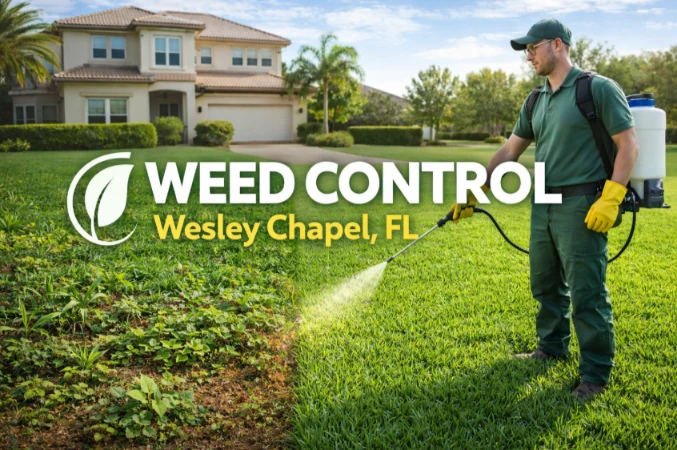
The Real Reason Weeds Grow Faster in Wesley Chapel Lawns
It comes down to three things that work together against you: the soil, the heat, and the type of weeds you’re dealing with. Each one on its own would be manageable. Together, they create conditions where weeds thrive almost year-round.
How Sandy Soil Weakens Your Lawn Over Time
Most of Pasco County sits on fine, well-drained sand. That’s the same soil running through neighborhoods like Seven Oaks, Meadow Pointe, Wiregrass, Epperson, and Estancia. It drains fast — sometimes too fast.
When rain hits sandy soil, it doesn’t just carry water down. It pulls nitrogen, potassium, and other nutrients out of the root zone before the grass can absorb them. Your lawn gets starved. Grass thins out. And the moment the grass gets thin, weeds find the open space and move in fast.
Think of it this way: healthy, dense grass is the best natural weed barrier you have. Sandy soil makes it hard to keep grass dense without consistent feeding. And without dense grass, weeds will always find a way in.
The key point: Nutrient leaching in sandy Pasco County soil is a slow leak — you may not notice it until weeds are already established and grass is visibly struggling.
Why Florida Heat Speeds Up Weed Growth
Wesley Chapel summers push past 92°F on average. That heat does something specific: it accelerates weed seed germination. Seeds that would take weeks to sprout in a cooler climate can break ground here in days.
Warm-season grasses like St. Augustine and Zoysia love heat too, but they have limits. Under prolonged heat stress — especially without proper nutrition — they slow down. Weeds don’t slow down. They exploit that gap and fill in any bare or weak areas faster than the grass can recover.
The other factor is Florida’s near year-round growing season. In northern states, winter freezes reset the lawn and naturally kill most weed seeds. In Wesley Chapel, there’s no true reset. The soil stays warm enough for weed germination almost every month of the year. You’re fighting an ongoing battle, not a seasonal one.
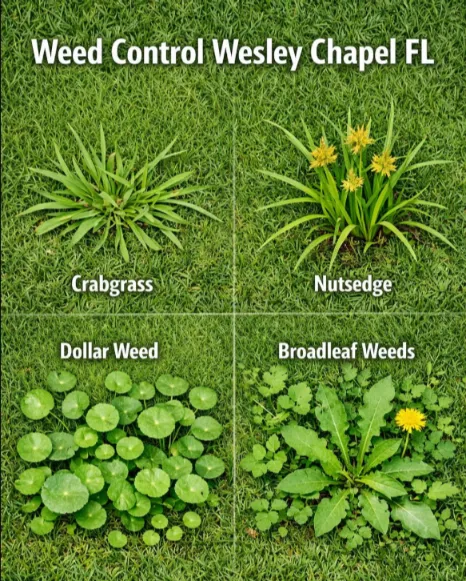
The Most Common Weeds You’re Dealing With
Crabgrass
A summer annual that germinates when the soil hits 55–65°F. Spreads fast and goes to seed before most people notice it. Extremely difficult to remove once established.
Nutsedge (Nutgrass)
Looks like grass but grows faster and darker. Produces underground tubers that survive most herbicides. Thrives in wet, poorly draining spots — common after Florida afternoon rains.
Dollar Weed
Round, coin-shaped leaves that love moist soil and over-irrigated lawns. Spreads through underground stems and seeds. Overwatering is one of the top reasons it shows up.
Broadleaf Weeds
Includes Florida pusley, chamberbitter, and spurge. These grow fast in thin grass and can cover large patches in weeks if left untreated during warm months.
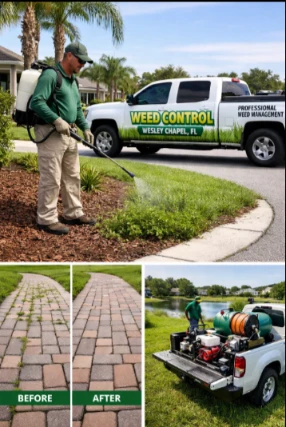
Why Your Weed Problem Keeps Coming Back (Even After Treatment)
This is the part most people don’t realize until they’ve been fighting weeds for a couple of seasons. Treating what you see is only half the problem. What you can’t see is what keeps it going.
Quick Fixes Only Kill What You See
Every weed you see above ground started as a seed in the soil. For most Florida lawn weeds, that seed bank is enormous. A single crabgrass plant can produce up to 150,000 seeds before it dies. Nutsedge generates underground tubers that can survive in the soil for years.
When you spray a post-emergent, and the plant dies, the seeds and tubers are still there, waiting. The next warm rain, the next break in your lawn’s density—and they germinate again. This phenomenon is why you can treat a lawn in April, feel good about it in May, and then watch it fill with weeds by June.
Rain and Water Wash Away Treatments
Florida’s afternoon storms are brutal on surface treatments. Granular products and liquid sprays need time to bind to the soil or absorb into leaves before rain hits. If a heavy storm rolls through within a few hours of treatment—which happens constantly here from May through September—you’ve lost a significant portion of its effectiveness.
This isn’t a flaw in the product. It’s a timing and application problem. Surface-level herbicides need to be applied at the right point in the weather cycle. A DIY application usually doesn’t account for the 24–48 hour window before the next afternoon downpour.
Weak Grass Gives Weeds Space to Grow
Here’s the thing that most weed conversations skip over: if your grass is healthy and dense, most weeds can’t compete with it. Thick turf shades the soil, reduces germination rates, and physically crowds out seedlings.
But when grass is stressed — from poor nutrition, wrong mowing height, drought patches, or pest damage — bare spots appear. Those spots are open invitations. Weeds are opportunists. They don’t create the problem. They show up because the problem is already there.
Why Store-Bought Weed Control Wesley Chapel Doesn’t Work Long-Term
Retail weed killers aren’t a scam. They work for what they’re designed to do. The problem is they’re designed for a different situation than what most Wesley Chapel lawns are facing.
Surface-Level Results vs. Root-Level Fix
Most big-box store products are post-emergent only. They kill the visible plant. That’s it. They don’t address the seed bank below the surface, and they don’t create any barrier against future germination.
A root-level fix means combining pre-emergent treatments — applied before seeds can germinate — with post-emergent control for what’s already visible. Without pre-emergent, you’re always reacting. You’ll always be two weeks behind the weed cycle, chasing a problem that started underground weeks before you ever saw it.
Wrong Timing = Wasted Effort
For central Florida, including Wesley Chapel, pre-emergent herbicides need to go down before soil temperatures consistently reach 55–65°F. That window typically falls in late January to mid-February for spring weed prevention. For fall weed prevention, the window shifts to late October through November.
Most homeowners buy weed killer when they see weeds — not before. By then, the seeds have already germinated. Pre-emergent doesn’t work on plants that are already above ground. You missed the window, and now you’re treating symptoms instead of preventing them.
Florida Lawns Need a Different Approach
St. Augustine, Zoysia, and Bahia all respond differently to herbicides. Some products safe for Bermuda grass will damage St. Augustine badly. Atrazine — commonly found in Florida-targeted weed-and-feed products — works well for St. Augustine but should not go on Bahia. Getting the grass-type match wrong can solve the weed problem while creating a new one: a damaged, stressed lawn that’s even more vulnerable to the next round of weeds.
A Smarter Way to Handle Weed Control, Wesley Chapel
Professional weed control isn’t complicated once you understand the logic behind it. It’s not about using stronger chemicals. It’s about using the right treatments, in the right sequence, at the right time. Here’s what that actually looks like.
Understanding Your Lawn Condition
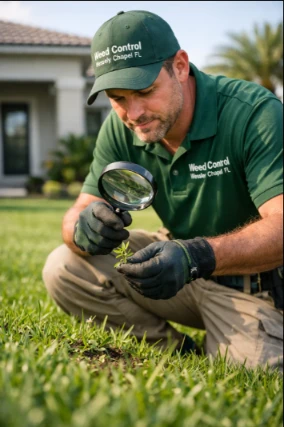
Before anything gets applied, the lawn gets assessed — grass type, soil condition, weed species present, drainage patterns, and weak spots. This determines the whole treatment approach.
Pre-emergent Herbicide Timing
Applied before weed seeds germinate, creating a barrier in the soil. In central Florida, this means February for spring weeds and late October for winter weeds. Timing is everything — a week too late, and the window is gone.
Post-emergent Herbicide Application
Targets weeds already visible and actively growing. The product must match both the weed type and your specific grass to avoid turf damage. Nutsedge, for instance, needs a different active ingredient than crabgrass.
Ongoing Lawn Monitoring
Pre-emergents last roughly 6–12 weeks before they break down. Follow-up applications keep the barrier active. This is why one-time treatments rarely hold—the protection simply expires.
The result of this sequence is cumulative. After the first few treatment cycles, the seed bank in the soil depletes over time. Fewer seeds mean fewer weeds in future seasons. The lawn gets easier to maintain, not harder.
Real Lawn Problems Homeowners Face (And What They Mean)
Real Lawn Problems Homeowners Face (And What They Mean)
My Lawn Was Fine… Then, suddenly, full of Weeds
This usually happens after a disruption—new sod installation, aeration, a heavy storm, or a period of missed watering. Any soil disturbance brings dormant seeds to the surface, where sunlight and warmth trigger germination. A sudden infestation usually means the seed bank was already there, waiting. The lawn just needed a crack to let it through.
I Keep Spraying, But They Come Back
If weeds return 2–3 weeks after every treatment, you’re winning individual battles and losing the season. Post-emergent without pre-emergent is like bailing water without plugging the leak. The seeds below the surface keep germinating in a continuous cycle. Breaking that cycle requires getting the pre-emergent barrier in place before the next germination window opens.
My HOA Is Starting to Notice My Lawn
Wesley Chapel’s master-planned communities—Wiregrass, Epperson, Estancia, Chapel Crossings, and Meadow Pointe—all have active HOA boards with architectural standards. A weed-heavy lawn can generate violation notices quickly. Getting a consistent treatment schedule in place keeps the lawn compliant and keeps you off the HOA’s radar without constant weekend maintenance.
What Actually Makes a Lawn Weed-Resistant
The goal of weed control isn’t just to kill weeds. It’s to create a lawn that naturally resists them. There’s a real difference between those two things.
Strong Roots and Dense Grass Coverage: Thick, established turf physically blocks sunlight from reaching weed seeds in the soil. Without light, seeds can’t germinate. A dense lawn is the most effective long-term weed barrier you can have — and it costs nothing extra once the grass is healthy.
Balanced Nutrients in Soil: Sandy, Pasco County soil loses nutrients fast. Regular fertilization keeps the grass fed, growing consistently, and competitive. Starved grass grows thin. Thin grass lets weeds in. Soil pH balance also matters — when it drifts outside the 6.0–7.0 range, grass can’t absorb nutrients properly even when they’re present.
Consistent Lawn Care Routine: Mowing at the right height for your grass type (3.5–4 inches for St. Augustine) helps roots stay deep and shades the soil from weed germination. Irregular care creates peaks and valleys — periods of stress where weeds can get established before the grass recovers.
Lawn Treatment Wesley Chapel, FL – The Missing Piece Most People Ignore
Weed control and lawn health aren’t separate problems. They’re connected. Treating weeds without addressing the underlying lawn health is why so many homeowners feel stuck in the same cycle year after year.
Lawn Fertilization and Weed Prevention
Fertilization and weed control work together. Nitrogen feeds the grass and promotes density. Dense grass competes with weeds and wins. Without consistent fertilization timed to Florida’s warm-season schedule, the lawn stays thin, and the weed cycle continues, no matter how often you treat for it. Slow-release fertilizers applied at the right intervals are especially effective for sandy Pasco County soil—they release nutrients gradually instead of washing out in the next rain.
Lawn Aeration for Stronger Soil
Sandy soil doesn’t compact the way clay does, but it can still develop thatch—a layer of dead grass and debris that builds up between the soil surface and the green blades above. Thatch holds water near the surface, which encourages dollarweed and sedge growth. It also blocks fertilizer and pre-emergent herbicides from reaching the root zone where they need to be. Aeration breaks through thatch, opens the soil, and lets treatments actually penetrate.
Why Soil Health Matters More Than Weed Spray
You can spray every weed you see and still lose this battle if the soil isn’t right. Soil that’s too acidic, too compacted, too nutrient-depleted, or chronically overwatered creates the exact environment weeds need to thrive. A healthy soil environment grows healthy grass that crowds out weeds on its own. Getting the soil right is essential. Weed spray is just the tool you use while the foundation is being built.
Why Professional Weed Control Saves Time, Money, and Effort
No More Guesswork
Knowing which product to use on which weed, on which grass type, at what rate, in what weather window — that’s a significant amount of knowledge. Getting any piece of it wrong wastes money and can set the lawn back. Professional treatment removes the guesswork entirely.
More Consistent Results
A scheduled treatment plan keeps pre-emergent barriers active year-round. The weed cycle gets disrupted season after season. Over time, the seed bank in the soil depletes, and the lawn requires less reactive treatment because fewer weeds are germinating in the first place.
Less Rework and Frustration
Every failed DIY treatment costs money, time, and energy. Products that don’t work still need to be disposed of. Weeds that survive come back stronger. A correct treatment done once is almost always cheaper than four incorrect treatments done four times.
What to Expect From a Weed Control Service in Wesley Chapel
There are no overnight miracles here. A successful weed control program sets honest expectations from the start. Here’s what a realistic timeline looks like:
TimeFrame
What Should You Do
1. Week 1–2
Post-emergent treatment begins working on visible weeds. Yellowing and wilting in treated plants. No new visible results yet from pre-emergence.
2. Week 3–4
Treated weeds are dying off. The lawn starts to look cleaner. The pre-emergent barrier is now active in the soil.
3. Month 2–3
Noticeably fewer new weeds are appearing. Grass begins to fill bare spots where weeds were. A second treatment round may be needed depending on the season.
4. After 2–3 cycles
Significant reduction in overall weed pressure. The lawn is denser and more resistant. Maintenance treatments keep the barrier active going forward.
The process works—but it works on a lawn’s schedule, not overnight. Anyone who guarantees a completely weed-free lawn in a single visit is peddling an unattainable promise.
Timeframe | Lawn Condition | What’s Happening |
Week 1–2 | Weeds start yellowing | Post-emergent working |
Week 3–4 | The lawn looks cleaner | Barrier becomes active |
Month 2 | Fewer new weeds | Grass starts filling gaps |
Month 3+ | Strong, dense lawn | Weed cycle breaking |
Areas We Serve Around Wesley Chapel
Weed problems don’t stop at city limits. The same sandy Pasco County soil and central Florida climate affect lawns across the wider area. We work with homeowners in the following areas:
Wesley Chapel
33543 · 33544 · 33545
Land ‘O’Lakes
North Pasco County
Zephyrhills
East Pasco
New Tampa
Hillsborough County
Lutz
Pasco / Hillsborough
Tampa
Surrounding metro
Within Wesley Chapel specifically, we serve neighborhoods including Seven Oaks, Meadow Pointe, Wiregrass Ranch, Estancia at Wiregrass, Epperson, WaterGrass, Chapel Crossings, Asturia, and Northwood. If your community has an HOA with lawn appearance standards, we understand those requirements and work within them.
If You’re Still Dealing With Weeds, Here’s the Truth
If weeds keep coming back every few weeks, it’s not because you’re doing something wrong. It’s not a lack of effort. It’s because the lawn isn’t being treated the right way for Florida conditions—and specifically for what Central Florida’s sandy soil, heat, and near year-round growing season demand.
Store-bought products treat the surface. Florida weed problems live below it. The timing windows are narrow. The seed banks are deep. The grass types are sensitive. And the climate keeps pushing weed pressure almost every month of the year.
None of that is something a bottle of Ortho or a bag of weed-and-feed from Home Depot was built to solve. It’s a different problem that needs a different approach.
If you’ve been fighting the issue for more than a season and the lawn is still losing, it might just be time to stop reacting and start preventing.